

Introduction
It’s easy to assume that in a market as digitally connected as the UAE, traditional and local advertising channels have lost their relevance. Social media targeting, search ads, and influencer marketing dominate most conversations about brand strategy today. But in reality, the most effective campaigns in the region rarely rely on digital alone. They combine strong digital reach with a genuine local presence — and that combination is where real, lasting visibility comes from.
The UAE’s Unique Advertising Landscape
The UAE presents a genuinely distinctive advertising environment. With a highly diverse, multilingual population made up of residents, expatriates, and a constant flow of tourists, brands cannot rely on a single channel or a single message to reach everyone effectively. Outdoor advertising along major highways, mall placements, community-level promotions, and event sponsorships still command real attention — often precisely because audiences are so saturated with digital content that a well-placed physical presence stands out more, not less.
Why ‘Digital-First’ Doesn’t Mean ‘Digital-Only’
The term ‘digital-first’ has become something of a default assumption in modern marketing strategy, often interpreted to mean digital-only. But being digital-first simply means starting the planning process with digital channels in mind — it doesn’t mean other channels should be ignored. In fast-moving, densely populated urban centres like Dubai and Sharjah, physical advertising still reaches people at moments digital simply can’t: while driving, while walking through a mall, or while waiting for a coffee order. Treating ‘digital-first’ as a strict hierarchy rather than a starting point causes many brands to under-invest in channels that are still delivering strong results.
The Case for Local and Traditional Advertising
Local advertising channels offer several advantages that purely digital campaigns often struggle to replicate:
- Building trust with a specific community or neighbourhood audience
- Creating strong visibility during business or product launches
- Reinforcing brand recall through repeated physical exposure
- Standing out during high-footfall periods such as national holidays, retail seasons, and major expos
- Reaching audiences who may not be highly active on the specific digital platforms a brand advertises on
These strengths make local advertising particularly valuable for businesses trying to establish credibility in a new market or geographic area, where an unfamiliar digital ad alone may not be enough to build trust.
Why Digital Advertising Still Deserves Its Place
None of this diminishes the real value of digital advertising. Precise targeting, real-time performance data, and the ability to test and adjust campaigns quickly make digital channels indispensable for measuring return on investment and reaching specific audience segments efficiently. The point isn’t to choose one over the other — it’s to recognise that digital and local advertising serve different, complementary roles within the same overall strategy.
Blending Local and Digital: The Omnichannel Approach
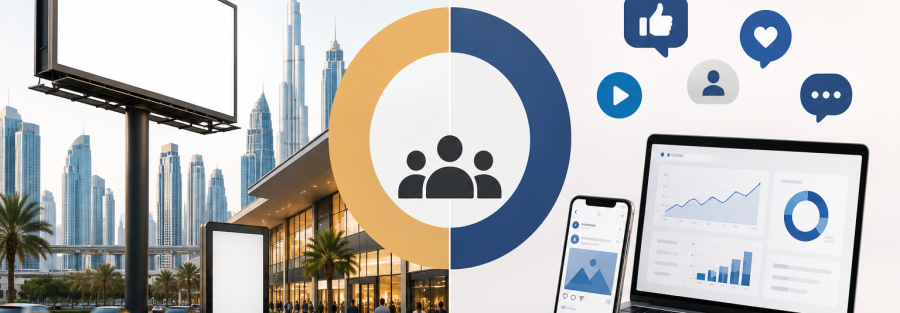
The strongest advertising campaigns in the UAE today treat local and digital advertising as two parts of the same story rather than competing budgets. A striking outdoor placement or local activation can drive people to search for a brand online, which digital retargeting can then follow up on. Conversely, a digital campaign that builds initial awareness can be reinforced by physical visibility in the areas where the target audience actually lives, works, and shops. This layered approach increases the number of touchpoints a potential customer has with a brand before making a decision, which consistently improves recall and conversion compared to single-channel campaigns.
How Consumer Behaviour in the UAE Shapes Advertising Choices
Understanding how people in the UAE actually move through their day helps explain why local advertising continues to perform well. Long commutes on major highways, frequent mall visits, and a culture of dining and socialising outside the home all create natural opportunities for physical brand exposure that don’t exist in the same way in every market. Add to this a population that is constantly refreshed by new residents and tourists — many of whom haven’t yet built brand loyalty or even awareness of local businesses — and the case for maintaining visible, real-world presence becomes even stronger. Digital advertising can struggle to reach this constantly shifting audience with the same consistency that a well-placed physical presence can.
A Practical Example
Consider a new retail brand launching in Sharjah. A digital-only campaign might generate clicks and impressions, but without any physical presence in the areas where the target customers actually shop, brand recognition can remain shallow. Pairing that digital campaign with local outdoor advertising near key retail areas, combined with a launch event or in-store promotion, creates a far stronger impression — turning a one-time click into a customer who recognises and trusts the brand the next time they see it, online or offline.
Budget Considerations: Splitting Spend Between Channels
One of the most common questions brands face is how to actually divide an advertising budget between digital and local channels. There’s no universal formula, since the right split depends on the industry, target audience, and campaign goal. A brand focused purely on e-commerce conversions may lean heavily digital, while a new restaurant or retail outlet trying to build neighbourhood awareness may benefit from a larger local advertising share in its opening months. A practical approach is to start with a baseline split — often somewhere close to even — and adjust based on which channel is actually driving measurable results for that specific campaign, rather than defaulting to whichever channel is easier to set up or track.
Measuring Success Across Channels
One reason digital advertising has become so dominant is the ease of measurement — clicks, impressions, and conversions are readily trackable. Local advertising requires a slightly different measurement approach: foot traffic changes, direct enquiries referencing a specific placement, and uplift in branded search volume following a local campaign are all practical ways to gauge impact. A well-planned advertising strategy should define these metrics upfront for both channels, rather than treating local advertising as unmeasurable and therefore secondary.
Conclusion
Advertising success in the UAE isn’t about choosing between digital and local — it’s about understanding when each performs best, and knowing how to combine them into a single strategy that reflects how people actually discover and trust brands in this market. Businesses that continue to underestimate local advertising risk leaving real, measurable visibility on the table.